
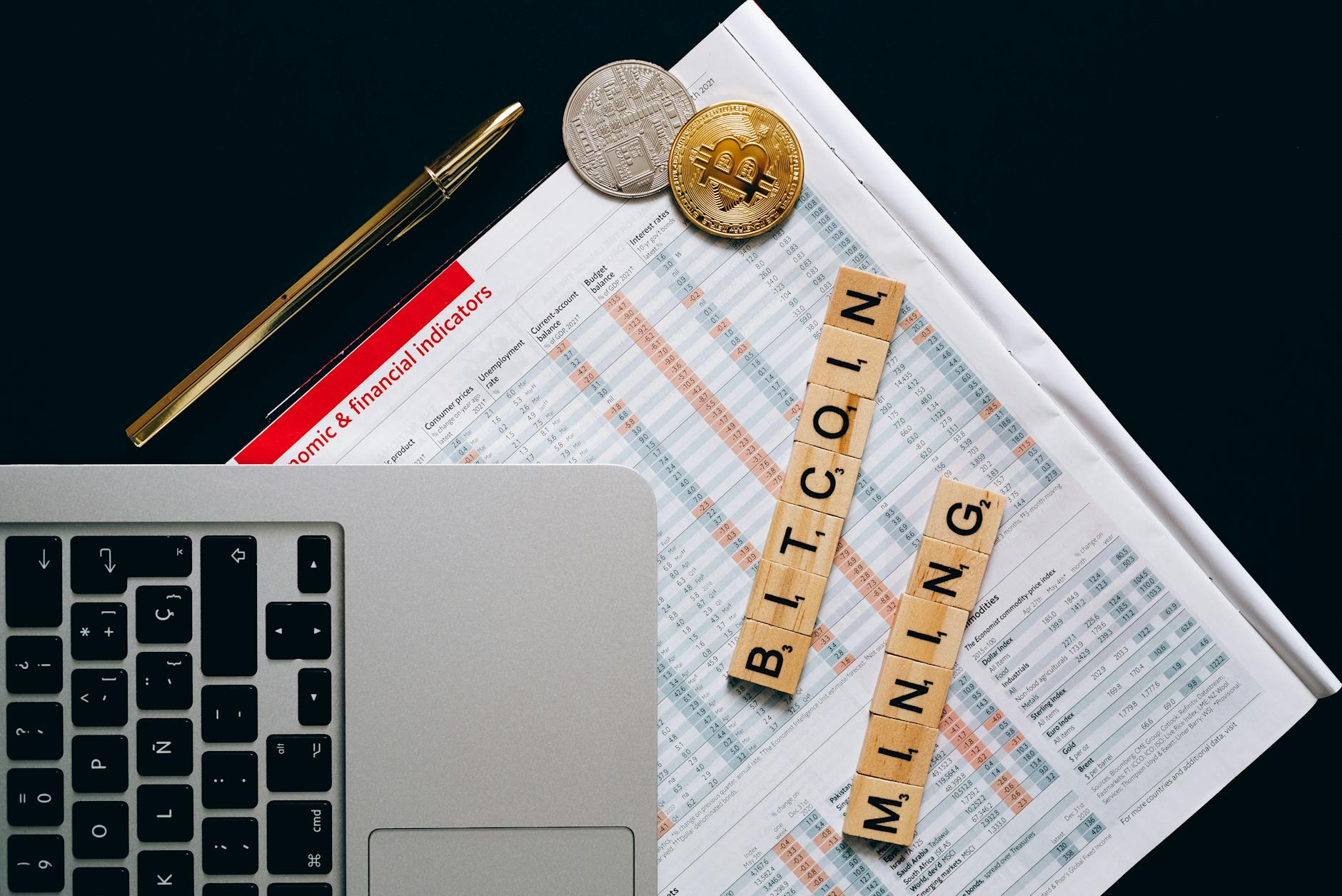
Bitcoin hash rate is the total amount of computing power that miners worldwide are directing at the network right now. It's measured in hashes per second, where a "hash" is one attempt by a mining machine to solve the cryptographic puzzle that creates a new block. At the time of writing, the global hash rate sits in the exahash range, meaning the network is processing hundreds of quintillions of these calculations every second. That number matters more than most beginners realise.
What a hash actually is
Every time a miner wants to add a new block to the blockchain, their hardware takes a bundle of pending transactions and runs it through the SHA-256 algorithm. The result is a fixed-length string of characters called a hash. The miner's job is to produce a hash that meets the network's current difficulty target, a hash that starts with a specific number of zeroes. There's no shortcut: the only way to find a valid hash is to try billions of combinations until one works.
This is why raw computing power matters. More machines running faster means more attempts per second, which means the network finds valid blocks more reliably. It also means any attacker trying to rewrite history needs to outpace the entire honest network. That's the security model in a single sentence.
How hash rate connects to network security
A high hash rate is the strongest signal that Bitcoin's proof-of-work system is functioning as designed. If an attacker wanted to rewrite recent transactions by producing a longer chain than the honest network, they'd need to control more than 50% of the total hash rate. This is what researchers call a 51% attack. When the hash rate is enormous and spread across thousands of independent mining operations globally, that attack becomes prohibitively expensive. At current hash rates, the hardware and electricity costs would run into billions of dollars, with no guarantee of profit.
When hash rate falls sharply, the opposite concern arises. A sudden drop can indicate that large mining operations have gone offline, often because a jurisdiction has banned mining or because electricity costs have made it unprofitable. A lower hash rate means a smaller attacker can cause damage with less capital. It's a temporary vulnerability, not a permanent one, but it's worth watching.
Hash rate and the difficulty adjustment
Bitcoin's protocol includes a self-correcting mechanism that keeps blocks arriving roughly every 10 minutes regardless of how much mining power joins or leaves. Every 2,016 blocks (approximately two weeks), the network recalculates its difficulty target. If the hash rate rose during the previous period, difficulty increases to slow things down. If it fell, difficulty drops to make finding a block easier again. The result is a stable block time even as the global hash rate swings by tens of percent.
This is why a sudden hash rate surge doesn't cause chaos. The Bitcoin difficulty adjustment absorbs the shock and rebalances the network automatically. For beginners, this means you don't need to worry that a flood of new miners will somehow break the 10-minute rhythm you rely on when sending or receiving funds.
What hash rate tells you about miner sentiment
Miners are running businesses. They buy hardware, pay for electricity, and sell the Bitcoin they earn. When the price of Bitcoin rises, mining becomes more profitable, and more operators plug in machines. Hash rate climbs. When price falls or energy costs spike, marginal miners switch off. Hash rate drops.
This relationship isn't instant. Mining hardware takes months to manufacture and ship. Contracts for electricity are often locked in for a year or more. So hash rate tends to lag price moves rather than lead them. But over longer timeframes, a rising hash rate is a strong signal that professional miners expect Bitcoin's price to stay high enough to justify the capital they're committing. It's a form of market confidence expressed in raw compute power.
Some investors track hash rate alongside price to identify periods where the two diverge. When price drops but hash rate stays high, it can suggest that miners remain committed and don't expect the slump to last. When hash rate drops faster than price, it can signal broader miner distress. Neither tells you exactly when to buy or sell, but both add context that price charts alone don't provide.
Hash rate and block rewards
Miners earn Bitcoin through the block subsidy, the freshly created coins awarded with every new block, plus any transaction fees included in that block. As the subsidy decreases over time through the halving schedule, fees become an increasingly important part of miner revenue. Hash rate trends over the next decade will partly reflect how well fee income replaces the shrinking subsidy. If you want to understand why miners care so much about fee levels, the relationship between the Bitcoin block subsidy and fees explains it in full.
How to find current hash rate data
Several reputable data providers publish live and historical hash rate figures. Blockchain.com's explorer offers one of the most accessible free charts, showing hash rate plotted against time with adjustable date ranges. You can compare hash rate against price, difficulty adjustments, and block intervals in a single view. Looking at a 12-month chart rather than a 24-hour snapshot gives you a much more useful picture of where the network is trending.
Common misconceptions beginners have about hash rate
The first is that a falling hash rate means Bitcoin is "dying." It doesn't. Hash rate fluctuates constantly. Major drops have happened after every Chinese mining crackdown in prior years, and the network recovered within weeks as machines were relocated to new jurisdictions. A temporary fall in hash rate triggers a difficulty drop, which makes remaining miners more profitable, which attracts new miners back in. The system is self-correcting by design.
The second misconception is that hash rate directly controls the Bitcoin price. It doesn't. The two are correlated over long timeframes because miner profitability links them, but hash rate doesn't set price any more than oil rig count sets the oil price. Both are outputs of the same underlying economics, not causes of each other.
The third is that more hash rate means faster transactions. Block time stays close to 10 minutes regardless of how much hash rate is on the network, because the difficulty adjustment keeps it there. If you're waiting for a confirmation, the mempool fee level matters far more than hash rate. You can read about how fees affect confirmation speed and what a Bitcoin mempool fee spike looks like for practical guidance on that.
Why beginners should care
Hash rate won't change how you buy or sell Bitcoin day to day. McLeod Pacific Investments handles the exchange side, and your transaction gets processed regardless of whether hash rate is at a record high or a three-month low. But understanding hash rate gives you a more honest picture of what you're holding. It's the clearest single measure of how much real-world energy and capital the world is committing to keep Bitcoin running. That commitment is the foundation of everything the network promises.