
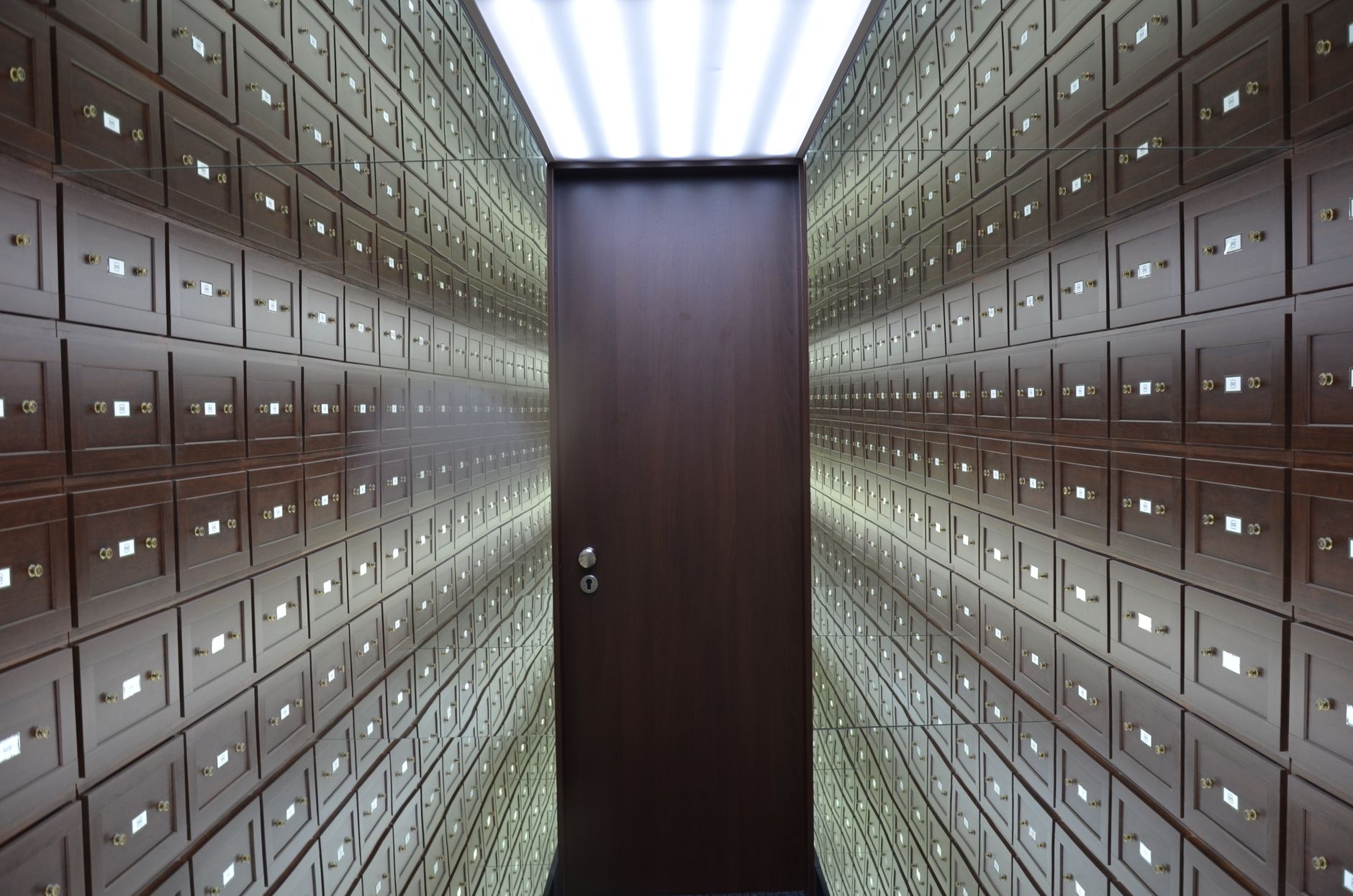
A safe deposit box ticks a lot of boxes on paper: it's locked, it's off-site, it's not connected to anything. For a Bitcoin wallet backup, those properties sound ideal. But safe deposit boxes also come with constraints that can quietly undermine the protection you think you're getting. A few planning decisions made before you put anything in the box separate a solid backup strategy from a false sense of security.
What you should actually store in the box
The most important thing a Bitcoin wallet backup contains is the seed phrase: the 12 or 24 words generated when you first created your wallet. Whoever holds those words controls the funds, permanently and irreversibly. This is both the reason the backup is valuable and the reason you need to think carefully about format before placing it in a safe deposit box.
Paper is the most common seed phrase backup format, but paper is fragile. Fire suppressant systems in bank facilities typically use water or chemical agents that can destroy ink and pulp within seconds. A metal seed phrase backup engraved or stamped onto a stainless steel plate is far more durable and should be your first choice for anything stored long term. Titanium plates offer even higher heat resistance. The cost is modest compared to what the backup protects.
Do not store a printed copy of your private key directly. A seed phrase is preferable because it regenerates your entire wallet, but a raw private key in plain text is a single point of failure with no recovery path if the format shifts. Store the seed phrase only, in the correct word order, with the word count confirmed before the box is sealed.
The access problem nobody mentions
Safe deposit boxes are controlled by the institution that houses them. Banks can restrict access during closures, insolvency proceedings, legal disputes, or natural disasters. In Australia, during declared emergencies, branch access has historically been suspended for days or longer. If you need your seed phrase urgently to recover funds or sign a time-sensitive transaction, the box may be unavailable.
This is a real operational risk, not a theoretical one. Your backup strategy should account for it. One approach: maintain a second physical backup stored separately, whether in a home safe bolted to the structure or at a trusted relative's address in a different location. The safe deposit box becomes your tertiary copy, not your only copy.
Joint account holders on a safe deposit box can access it independently unless the box is designated as requiring both signatories. If you're planning for inheritance or shared access, the box account structure matters as much as what's inside. Read the terms before signing. If you want your next of kin to access the box without a court order, the simplest path is to name them as a joint holder now, not after the fact.
What the bank doesn't insure
In Australia, safe deposit box contents are not covered by the Financial Claims Scheme, which protects deposit accounts up to $250,000. The contents of the box itself are your responsibility. Most banks carry no liability for theft, damage, or loss of items stored inside. A small number of insurers offer standalone contents cover for safe deposit boxes, but the policies are narrow and typically exclude intangible assets.
Bitcoin held in a wallet is not a physical asset and won't appear on a standard contents policy. If the backup is destroyed in a fire or flood and you have no secondary copy, the loss is permanent. This is why the combination of a metal backup format and a second geographic location is worth treating as a hard requirement, not a nice-to-have.
Keeping the backup secure in transit
Getting the backup to the box without exposing it is a step most guides skip. Photographing the seed phrase on your phone before sealing it is a common mistake: your camera roll is one of the most exposed surfaces on any device, synced to cloud storage by default on most setups. The risks here are covered in detail in the article on how to safely photograph Bitcoin wallet information, and the short version is: don't do it.
Transport the backup in an opaque envelope or sealed container. Don't read the words aloud or transcribe them digitally at any point during transit. If you're using a metal plate, wrap it to prevent casual observation. The journey from your home to the bank branch is a real exposure window.
Passphrases and plausible deniability
If someone gains access to the safe deposit box, they gain access to your seed phrase. That's the worst-case scenario for a single-backup holder. One mitigation is to use a Bitcoin wallet that supports a BIP39 passphrase (sometimes called a 25th word). The passphrase is separate from the seed phrase and isn't stored in the box. An attacker who finds the seed phrase alone cannot move funds without the passphrase.
This approach does introduce a new risk: if the passphrase is forgotten or lost, the funds are gone. Write it down separately from the seed phrase and store it in a different physical location. A passphrase stored in the same box as the seed phrase defeats the purpose entirely.
Reviewing the backup annually
Safe deposit box contents don't deteriorate on their own unless they're paper, but your wallet setup can change over time. If you migrate to a new wallet, generate a new seed phrase, or change your passphrase, the backup in the box becomes outdated. Set a calendar reminder to review the box contents once a year. Confirm the seed phrase still matches your active wallet by doing a dry-run recovery on a device that isn't your primary hardware wallet, using a watch-only mode or an airgapped test environment.
A backup you haven't verified is a backup you can't trust. The annual check is a 20-minute task that costs nothing and closes a gap that many holders discover only at the worst possible moment.
Who should know the box exists
A Bitcoin inheritance plan only works if the people who need to act after your death know what to act on. The existence of a safe deposit box, its location, the institution name, and the box number should be documented somewhere your executor or next of kin can find. That document doesn't need to contain the seed phrase itself, but it does need to point to where it is.
A sealed letter held by your solicitor is one option. A clearly written note in your will or estate documents is another. The goal is to ensure someone trustworthy knows the backup exists without giving them immediate access to it while you're alive. The mechanics of this form part of any complete Bitcoin inheritance plan, and the specific decisions involved around couples and joint holders are worth working through before you assume the box alone is sufficient.
The safe deposit box is one layer. Combined with a metal backup format, a secondary off-site copy, a well-considered passphrase setup, and a clear inheritance record, it becomes a genuinely strong part of a broader strategy. Used alone, it's a single point of failure with a bank-shaped lock on it.