
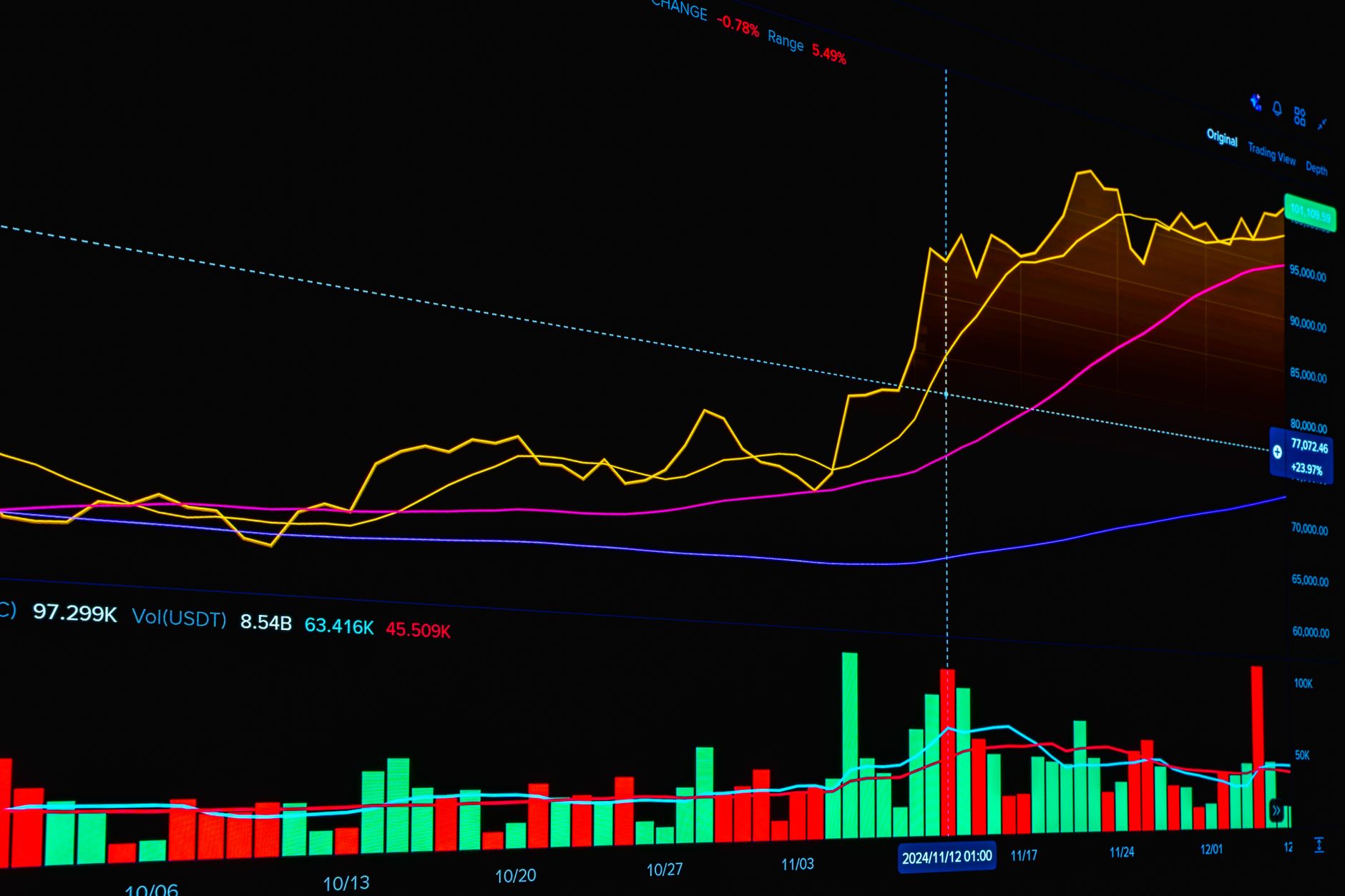
Averaging down is the practice of buying more of an asset after its price has fallen, which lowers your average entry cost per unit. In Bitcoin investing, it's one of the most debated moves a holder can make. Done with a plan, it can meaningfully reduce your cost basis and improve long-term returns. Done impulsively, it can expose you to deeper losses on an asset you bought at the wrong time for the wrong reasons.
What averaging down actually does to your position
The maths is straightforward. If you buy 0.1 BTC at $80,000 and Bitcoin falls to $60,000, buying another 0.1 BTC gives you 0.2 BTC at an average cost of $70,000. Your break-even point drops by $10,000 per coin. That sounds useful, and it can be. But it also doubles your total exposure to an asset that is currently moving against you.
Understanding your Bitcoin cost basis is the first thing to get clear before you consider adding to a position. Without knowing your exact entry price, you can't calculate what averaging down actually achieves, or how far Bitcoin needs to recover for you to be in profit.
The key distinction is between averaging down with fresh capital you planned to deploy anyway, versus averaging down by moving money out of savings or selling other assets in a panic. The first is a strategy. The second is usually emotional decision-making dressed up as one.
When averaging down makes sense
There are conditions under which buying more Bitcoin at a lower price is a rational call:
- Your initial position was sized conservatively and always left room for a follow-up purchase.
- The capital you're using was already allocated to Bitcoin and sitting idle waiting for a dip.
- Your conviction in Bitcoin's long-term value hasn't changed, and the price drop reflects market sentiment rather than a fundamental shift in the network.
That third point matters more than most investors realise. Averaging down works as a strategy when the asset's underlying fundamentals remain intact. Bitcoin's network continues to operate, its fixed supply of 21 million coins hasn't changed, and its adoption curve hasn't reversed. A 30% price drop doesn't change any of that. If your original thesis was sound, a lower price is, by definition, a better entry point.
Investors who follow a structured dollar-cost averaging approach often find averaging down fits naturally into their routine. If you already buy on a fixed schedule, a price drop simply means your regular purchase buys more Bitcoin than it would have a month ago. That's the mechanism working as intended.
When averaging down becomes a trap
The danger is a psychological pattern called "the sunk cost fallacy." Once you've bought Bitcoin at $80,000, there's a powerful pull to keep buying at $70,000, then $60,000, then $50,000, each time telling yourself recovery is imminent. This can drain liquidity you need elsewhere and concentrate your risk in a single asset at a moment when confidence is already low.
A few situations where averaging down is usually the wrong call:
First, if you're already over-allocated. Bitcoin position sizing should be set before you enter, not after the price moves. If Bitcoin already represents more of your portfolio than your risk tolerance supports, adding more isn't disciplined investing. It's doubling down on a mistake.
Second, if you're using borrowed money or credit. Bitcoin's volatility is well-documented, and a leveraged position on a falling asset can reach zero before recovery arrives. No averaging-down thesis survives margin calls.
Third, if the drop is driven by a structural change rather than sentiment. Regulatory bans in major markets, security vulnerabilities in the protocol, or a significant collapse in mining infrastructure are different from routine market corrections. A price drop with a genuine fundamental cause warrants reassessment, not automatic buying.
How to build averaging down into a plan before you need it
The investors who handle market dips well almost always made their decisions before the dip arrived. Setting price levels in advance removes the emotion from the moment. For example, you might decide that if Bitcoin falls 20% from your entry, you'll deploy a set amount from your reserve. If it falls 35%, you deploy another tranche. These decisions get made calmly, with full information, not in the middle of a fast-moving market.
Price alert tools help here. Bitcoin price alerts let you set triggers at your pre-planned levels so you're notified the moment conditions are met, rather than watching charts around the clock and reacting to noise.
Position limits matter too. A sensible approach might cap any single top-up at a percentage of your total Bitcoin allocation. This prevents one bad week from consuming capital you'd planned to spread across 12 months of buying.
Averaging down vs dollar-cost averaging: the real difference
Dollar-cost averaging (DCA) is systematic. You buy at fixed intervals regardless of price. Averaging down is discretionary. You buy in response to a price drop. Both lower your average cost over time, but they behave very differently under stress.
DCA removes the decision entirely. You don't need to judge whether now is the right moment because the schedule decides for you. Averaging down requires a judgment call every time, which means it requires discipline every time. Most investors find DCA easier to stick with because it doesn't ask them to act during a moment when confidence is shaky.
The two approaches aren't mutually exclusive. A DCA schedule handles regular purchases, while a pre-set averaging-down rule handles opportunistic top-ups at significant pullbacks. Together, they cover most market scenarios without requiring you to make a fresh decision each time Bitcoin moves.
The bottom line
Averaging down on Bitcoin isn't inherently good or bad. It's a tool, and its value depends entirely on how it's used. Used with a pre-planned budget, a clear conviction about long-term value, and a firm position limit, it can reduce your cost basis and improve your outcome. Used reactively, without a cap, and with capital you can't afford to lose, it compounds the problem it was supposed to solve.
Decide your averaging-down rules when you first enter a position. Write them down. Then follow them when the moment arrives, not the feeling you have in the moment.