
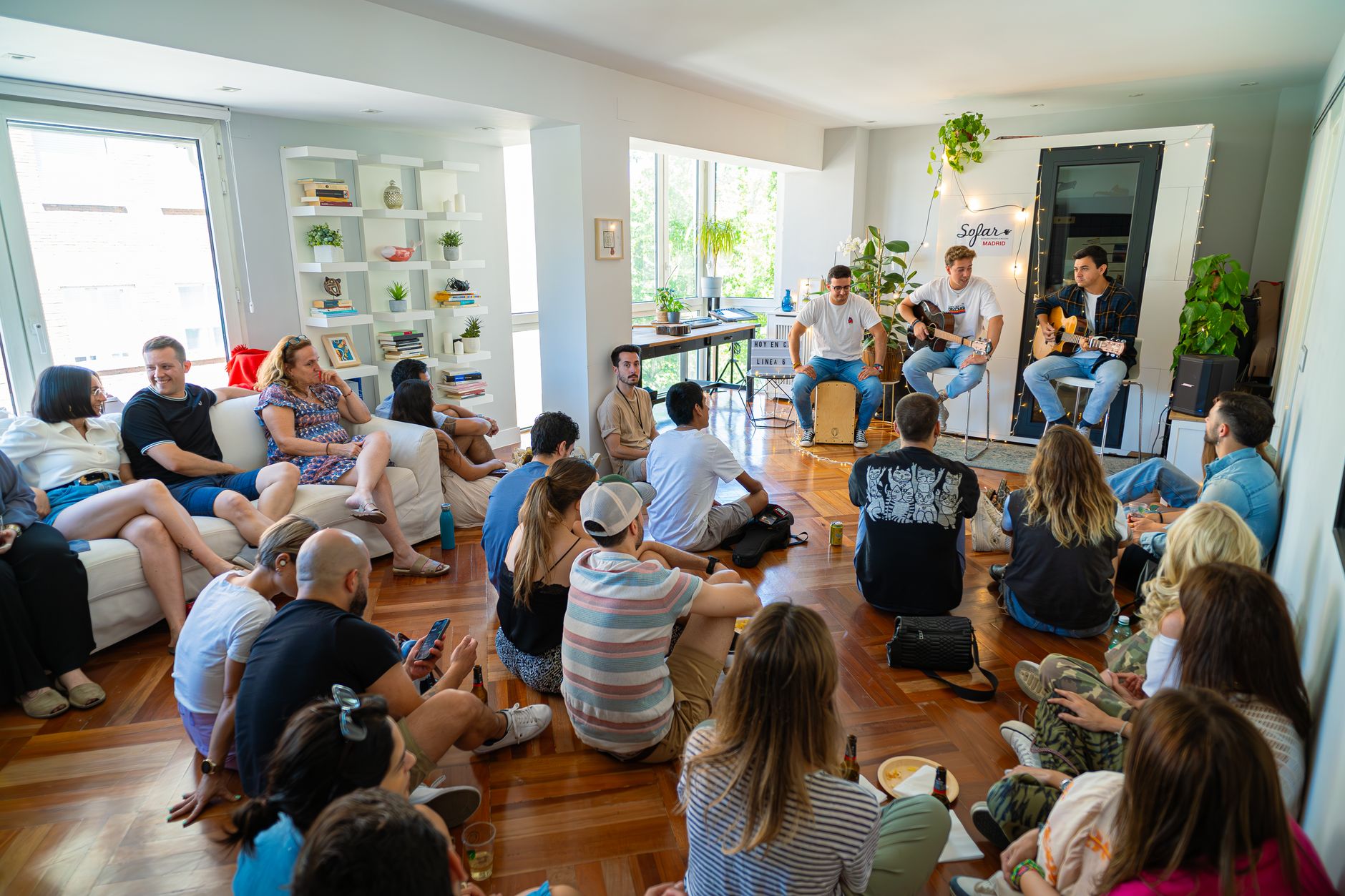
House concerts occupy a unique corner of live music: small, personal, and almost entirely cash-run. A host opens their home, 30 people crowd into the lounge room, and an artist plays a two-hour set for a door fee collected in an envelope. It's a beautiful model, and it's been quietly broken by the same frictions that plague small-scale live events everywhere: cash handling, last-minute guest payments, and paying a touring artist who lives in another state or country. Bitcoin is solving all three, and the uptake among independent event organisers is growing.
Why Bitcoin fits the house concert model
House concerts don't have box offices or merchant terminals. Payments happen between friends and strangers who trust the host. Bitcoin works the same way: peer-to-peer, no intermediary, no card surcharge, no merchant account required. A host can share a Bitcoin address or QR code on the event invite, collect payments before the night, and hold them in a wallet until the artist arrives and requests a transfer. The whole settlement takes minutes.
Touring artists benefit even more. A musician finishing a regional run in Queensland shouldn't have to wait three business days for a bank transfer to clear before they can cover petrol to the next gig. Bitcoin settles directly into an artist's wallet, regardless of which bank they use or which state they're in. For international touring acts, the advantage is sharper still: no SWIFT delays, no conversion fees eating into a small fee.
If you're new to how Bitcoin payments actually reach someone's wallet, it helps to first understand what a Bitcoin address is and how it works. An address is all an artist needs to share with the host to receive payment instantly.
Collecting door fees with Bitcoin
The most common setup is simple. The host creates a wallet on their phone, generates a receive address or QR code, and shares it via the event group chat a few days out. Guests pay before the event, which also functions as a soft RSVP confirmation. On the night, the host transfers the collected amount to the artist in a single transaction.
A few practical points worth knowing:
- Network fees are small but real. If you're collecting 20 payments of $25 each, those are 20 separate inputs, which can slightly inflate the fee when you consolidate and send to the artist. It's still far cheaper than a card terminal's percentage cut.
- Collecting a lump sum rather than 20 individual transfers is cleaner. Ask guests to pay into the host wallet, then do one artist payment. Fewer transactions means a tidier fee structure.
- Confirm the receiving address with the artist before the event. A copy-paste error can't be reversed once a Bitcoin transaction is broadcast.
Paying artists across borders
Independent touring is genuinely international. A folk duo from New Zealand, a blues guitarist visiting from the UK, a jazz trio doing a Pacific run: these are exactly the artists who end up at house concerts, and they're also the ones most hurt by cross-border payment delays. Traditional international transfers can take 2 to 5 business days and cost $15 to $35 per transaction in bank fees alone, before exchange rate spreads are factored in.
Bitcoin removes that friction entirely. The artist shares their wallet address, the host sends after the show, and the funds arrive in minutes. The artist converts to local currency through a registered exchange when it suits them. McLeod Pacific Investments operates as a registered Digital Currency Exchange Provider on the Gold Coast, giving Australian residents a straightforward way to buy Bitcoin to pay artists, or to sell Bitcoin received as a performance fee.
For artists thinking about how to manage Bitcoin received from multiple gigs, the Bitcoin for musicians guide covers wallets, conversion, and the practical side of accepting crypto as part of a performance income stream.
Ticketing for slightly larger events
House concerts occasionally grow. A backyard show for 80 people, a warehouse event for 150, a rooftop session with a ticketed capacity: these sit between the truly informal and the fully ticketed venue world. Bitcoin works here too, though the logistics shift slightly.
Some independent promoters use a simple pre-payment system where each guest sends a fixed Bitcoin amount to the event wallet and receives a confirmation code in return. The QR code on entry is checked against a list. It's low-tech, but it works, and it cuts out ticketing platform fees that typically run between 10% and 15% of the ticket price for small independent events.
Bitcoin for sports fans covers a related angle on how crypto is being used at live ticketed events, including some platforms that have formalised Bitcoin payment flows for entry.
What organisers should know about price volatility
Bitcoin's price moves. A door fee set at 0.0003 BTC when Bitcoin trades at $100,000 AUD is worth $30. If the price drops 10% between collection and payout, the artist receives the equivalent of $27. For small events with tight margins, this matters.
The simplest fix is to collect and pay out on the same day. The shorter the window between receiving and sending, the less exposure to price movement. Alternatively, some hosts quote a fixed AUD amount but accept Bitcoin at the current rate on payment, recalculating the BTC figure each time. A few Bitcoin wallet apps support this with a built-in fiat converter at point of payment.
For a more detailed look at how Bitcoin's price swings work and what drives them, the guide to understanding Bitcoin volatility is worth reading before you set your first event fee in crypto.
Tips for hosts running their first Bitcoin event
Start with a hybrid approach. Accept both cash and Bitcoin for the first event. This removes pressure on guests who don't yet hold crypto and lets you test the payment flow without putting the whole night at risk. Most hosts find that 20% to 40% of guests choose Bitcoin when it's offered as an option alongside cash, simply because it's faster and removes the need to carry notes.
Set up your wallet beforehand. Don't install an app the day of the event. Test a small transaction with a friend first so you know the receive address displays correctly and payments appear in the wallet. Bitcoin.org maintains a list of vetted wallet options for those starting out.
Tell the artist upfront. Some artists will want to receive AUD, not Bitcoin. That's completely valid. If the artist prefers fiat, collect Bitcoin from guests and convert before payment. McLeod Pacific Investments makes that conversion straightforward for Gold Coast residents and anyone transacting within Australia.
House concerts work because they strip live music back to its essentials: an artist, a room, and people who care enough to show up. Bitcoin fits that ethos well. It's direct, it's fast, and it doesn't ask anyone to take a percentage for standing in the middle.