
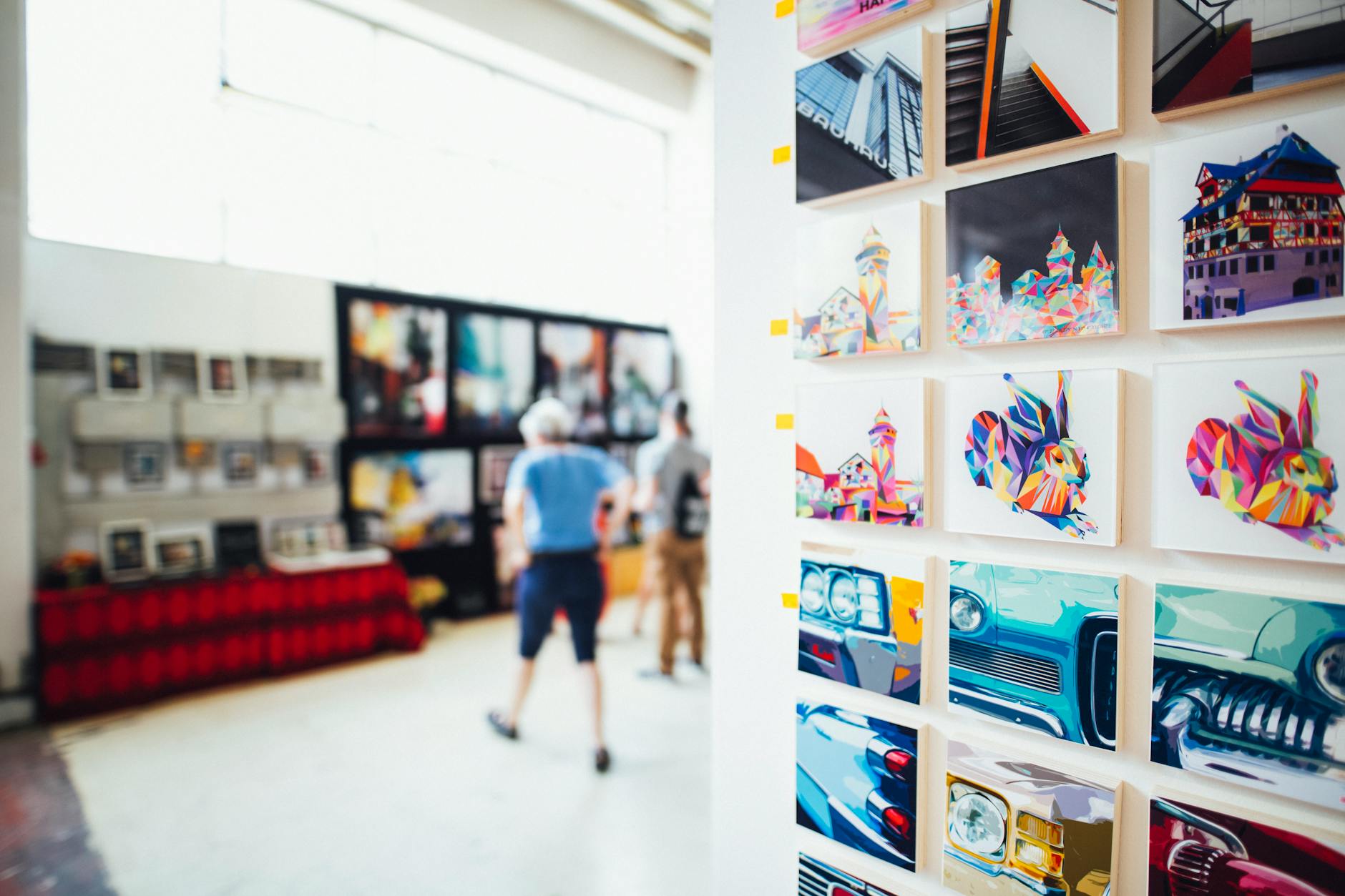
Bitcoin is finding a serious role in the art market, and it's not just about digital art or speculative collectibles. Physical galleries, auction houses, and independent artists are using Bitcoin to settle sales, pay international consignment partners, and accept payment from buyers who won't touch a wire transfer. The shift is quiet but real, and it's changing how money moves in one of the world's oldest traded asset classes.
Why the art market suits Bitcoin
Art transactions share a specific set of problems that Bitcoin is unusually well placed to solve. Sales are often large, infrequent, and cross-border. A collector in Sydney buying a piece from a Berlin gallery has to deal with currency conversion, correspondent banking delays, and settlement windows that can stretch across days. Bitcoin collapses that to minutes, with a fee that doesn't scale with the transaction size.
Galleries also deal regularly with buyers who prefer discretion. Bitcoin doesn't require a seller to know a buyer's bank details, and it doesn't route funds through a third party that might flag a large transfer for review. That's not about circumventing anything. It's about a cleaner, more direct exchange between two parties who have already agreed a price.
The art world has also always been comfortable with unconventional payment arrangements. Instalment deals, trade exchanges, and barter arrangements are common. Bitcoin fits into that culture more naturally than it does in, say, retail banking.
How galleries are using Bitcoin in practice
Galleries accepting Bitcoin typically handle it in one of two ways. Some convert immediately to Australian dollars or another fiat currency at the point of sale, using a registered exchange provider to handle the conversion. Others hold a portion of Bitcoin receipts as a treasury asset, particularly if they're selling internationally and prefer to avoid multiple currency conversions.
For galleries selling to international buyers, Bitcoin removes the correspondent banking step entirely. A buyer in the United States or Europe sends Bitcoin directly to the gallery's wallet. The gallery receives confirmed funds, typically within an hour for a standard transaction, and the artwork ships. There's no waiting on a SWIFT transfer to clear, no risk of a chargeback, and no bank fee eating into a margin that's already tight.
Artist consignment arrangements are also changing. When a gallery holds work on consignment and owes an artist a percentage of a sale, that payment can now be settled in Bitcoin directly to the artist's wallet. For artists living abroad or working across multiple countries, this cuts the administrative burden significantly. McLeod Pacific Investments provides Bitcoin trading services that make this kind of settlement straightforward for Australian galleries and artists looking to receive or convert funds.
What collectors need to know before paying in Bitcoin
Paying for art with Bitcoin is a taxable event in Australia. The Australian Taxation Office treats Bitcoin as property, which means spending it to buy an artwork triggers a capital gains calculation on any increase in value since you acquired the Bitcoin. If you bought Bitcoin at $40,000 and used it to pay for a painting when Bitcoin was worth $80,000, you've realised a gain on the Bitcoin portion of that transaction.
This is the same principle that applies to what counts as a cost base deduction in Bitcoin tax calculations. Keeping clean records of your acquisition price and the fair market value at the point of each spend is essential. It's not complicated, but it does require discipline from the start.
Collectors using Bitcoin to buy art should also think carefully about wallet setup before a large transaction. A purchase worth tens of thousands of dollars warrants sending from a wallet where you control the private keys, not directly from an exchange account. Verifying the receiving address carefully before confirming is non-negotiable. Verifying a Bitcoin transaction before you send it takes two minutes and can prevent a permanent loss.
Auction houses and high-value settlements
A small number of auction houses internationally began accepting Bitcoin for high-value lots in the early 2020s. The argument for it is straightforward: auction sales routinely attract international bidders, and collecting payment across jurisdictions is one of the slowest parts of the post-auction process. Bitcoin removes the jurisdiction entirely.
For Australian auction houses, the Australian Transaction Reports and Analysis Centre (AUSTRAC) registration framework applies to any business handling digital currency exchange. That means a gallery or auction house facilitating Bitcoin payments as part of its standard operations may need to register as a Digital Currency Exchange provider, or work with one that is already registered. McLeod Pacific Investments holds that registration and provides Bitcoin trading services to individuals and businesses on the Gold Coast and across Australia.
Pricing art in Bitcoin: a practical note
Some galleries have experimented with quoting prices in Bitcoin directly. It sounds appealing but creates a genuine accounting problem. Bitcoin's price moves. A work priced at 0.5 BTC in January might be worth a very different AUD amount in March. Most galleries instead quote in AUD and accept Bitcoin at the market rate on the day of settlement, which keeps their books clean and avoids disputes over which price applied.
This is the same logic that most Bitcoin-accepting businesses apply across other industries. The shift in how e-commerce handles Bitcoin payments shows the same pattern: price in local currency, settle in Bitcoin at point of sale, convert or hold depending on treasury preference.
The independent artist perspective
For artists selling directly to collectors, Bitcoin removes a layer of infrastructure that never really served them well. Accepting a bank transfer from an overseas buyer means waiting on a transfer that might arrive in three days or five, minus whatever the correspondent bank took. A credit card payment means a 2–3% processing fee and a chargeback window that leaves the artist exposed for months.
Bitcoin settles once. It doesn't reverse. For a sole trader artist selling a $5,000 original, keeping an extra $100 in fees and removing the chargeback risk is a real difference to the bottom line.
Artists looking to start accepting Bitcoin don't need much: a wallet, a willingness to quote a Bitcoin equivalent on the day of sale, and a registered exchange provider to convert funds if they don't want to hold. McLeod Pacific Investments offers straightforward buy and sell services for exactly this kind of use case, with multiple payment options and no requirement to navigate a complex trading platform.
What comes next for art and Bitcoin
The art market moves slowly by design. Provenance, trust, and relationship matter more than technology. But the payment layer underneath that culture is changing, and galleries that can offer Bitcoin as an option are positioning themselves to work with a growing segment of collectors who hold significant crypto wealth and prefer to spend it directly rather than convert first.
Australia's regulated Bitcoin environment makes this practical rather than speculative. The framework exists. The infrastructure exists. For galleries, auction houses, and independent artists willing to learn how the settlement process works, Bitcoin is a functional payment method right now.