
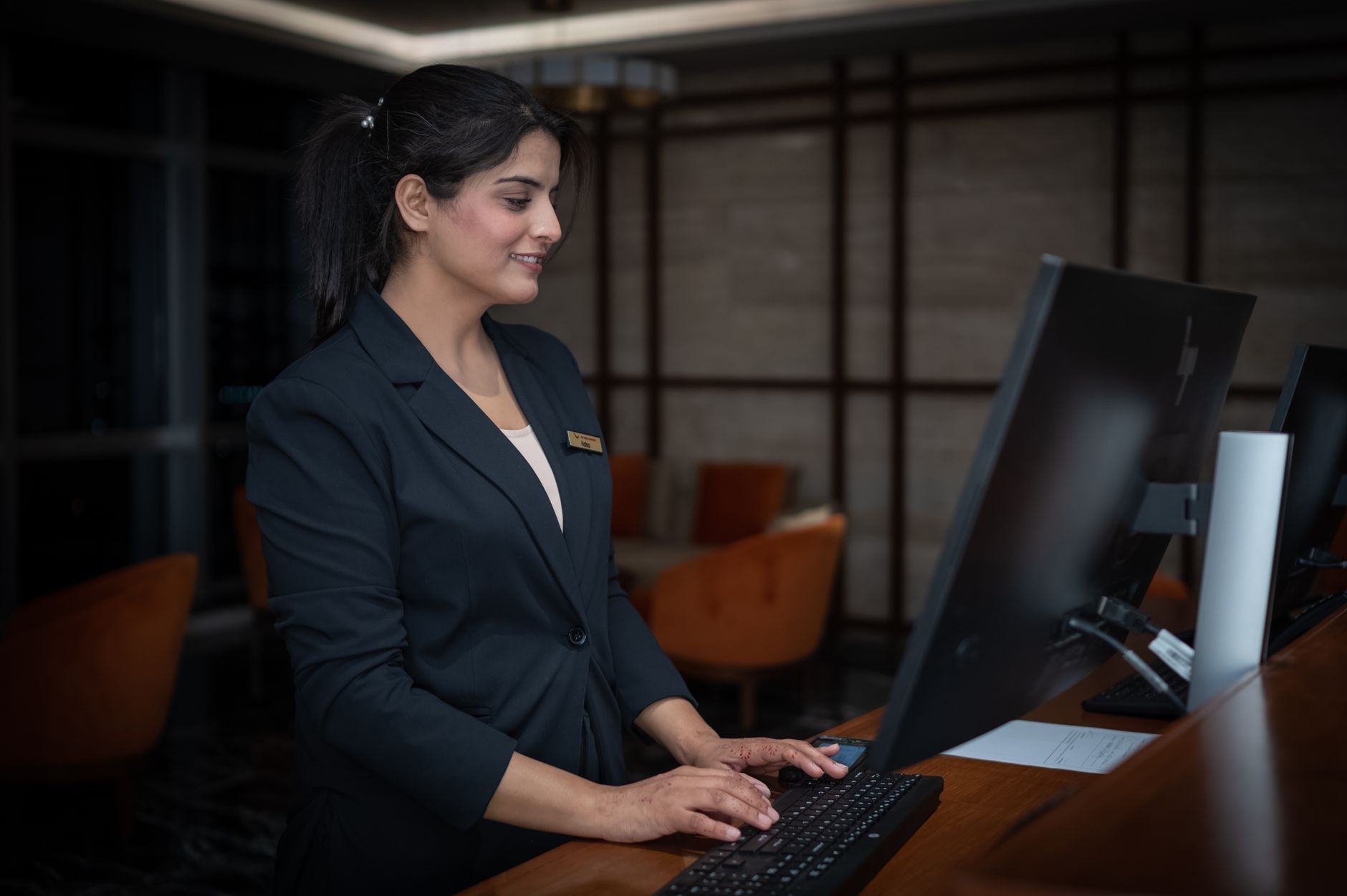
Hotel business centre computers are a tempting shortcut when you're between devices or travelling light. They're free, they're fast, and they're right there in the lobby. For most tasks, the risk is manageable. For anything touching your Bitcoin, the risk is not. Hotel computers sit at the intersection of two dangerous conditions: they're shared by hundreds of strangers each week, and they're rarely maintained to any meaningful security standard.
Why hotel computers are uniquely dangerous for Bitcoin
Public computers at libraries and internet cafés share most of the same risks, but hotel computers have a few specific problems. Guests cycle through them constantly, often with minimal supervision. IT support at most hotels is handled by a third-party contractor who may visit the property monthly at best. Software updates, antivirus definitions, and operating system patches can fall weeks or months behind. That gap is exactly where keyloggers and browser-based malware live.
Keyloggers are the primary threat. A keylogger is a small program installed on the machine that records every keystroke typed, including wallet passwords, seed phrase fragments, exchange login credentials, and anything else you enter. Some keyloggers are installed deliberately by attackers who know hotel computers are used carelessly. Others arrive through malware that hotel IT simply hasn't cleaned up. Either way, anything you type on a hotel machine should be treated as potentially captured.
Browser sessions are another exposure point. Most hotel computers run shared browser profiles that don't clear cookies, history, or saved passwords between users. A previous guest may have left an active session open. Your own session, if you close the browser without logging out, will be accessible to the next person who sits down.
What you should never do on a hotel computer
Certain actions on a hotel machine create risks that can't be undone. Logging into a Bitcoin exchange is the most dangerous. Your username and password will pass through a potentially compromised keyboard and browser. Even if you use two-factor authentication, an attacker with real-time keylogger access can race to use your credentials before the session expires.
Entering any part of your seed phrase is off limits entirely. A seed phrase typed into any input field on a hotel computer should be considered exposed. There's no recovery from that mistake. If you need a reminder of why seed phrase security is so critical, the principles covered in what is a seed phrase and why does it matter explain the stakes clearly.
Accessing a software wallet, downloading a wallet app, or visiting any site that requires private key interaction are all actions to avoid. The same applies to copying a receiving address from a hotel machine, since clipboard hijacking software can silently replace addresses you paste elsewhere.
What's relatively safe on a hotel computer
Not every Bitcoin-related task is equally dangerous. Checking a public blockchain explorer to verify whether an incoming transaction has confirmed is low risk. You're not entering credentials and you're not exposing any private information. Reading Bitcoin news or checking the public price is similarly benign.
If you need to share a receiving address with someone, generating it on your own device and reading it to them verbally, or displaying it on your own screen, keeps the hotel machine out of the loop entirely. The principle is simple: the hotel computer should never see anything that grants access to your funds.
How to handle genuine emergencies
Sometimes a situation feels urgent. A transaction has been pending for longer than expected. You think you may have sent to the wrong address. You need to check a balance before making a time-sensitive decision. In these cases, the hotel computer should still be a last resort rather than a first option.
Your own mobile phone on mobile data is a far safer alternative, even if the screen is small and the connection is slower. A personal mobile hotspot avoids the hotel's network entirely. If you're concerned about mobile hotspot risks specifically, McLeod Pacific Investments covers them in detail in the guide on how to safely use Bitcoin on a mobile hotspot.
If you genuinely have no alternative device and must act, use the hotel computer only to view read-only information. Do not log in anywhere. Do not type credentials. If an exchange requires you to log in, accept that the action will have to wait until you're on a trusted device.
After using a hotel computer for any reason
If you did log into any account on a hotel machine, even briefly, treat those credentials as compromised and change them immediately from a secure device. Enable or rotate your two-factor authentication. If you use SMS-based two-factor authentication for any Bitcoin-related accounts, be aware that Bitcoin security best practices recommend moving to an authenticator app, since SMS can itself be intercepted through SIM swap attacks.
Check your exchange account's login history as soon as you're back on a safe device. Most reputable exchanges log the IP address and device associated with each session. If anything looks unfamiliar, revoke sessions and change your password immediately.
Clear the browser history, cookies, and any saved data before you leave the machine. It won't protect you from a keylogger that already captured your input, but it does protect the next person from your session data, and it's good practice regardless.
The broader lesson for travelling Bitcoin holders
Hotel computers are one of several shared environments that create specific risks for Bitcoin holders. The same logic applies to borrowed devices, shared work terminals, and unfamiliar networks. The consistent principle across all of them is that access to Bitcoin requires a device you control, running software you trust, on a network you've vetted. A hotel business centre offers none of those three things.
Travelling with a dedicated device that holds no sensitive data, and keeping your Bitcoin access limited to that device or your personal mobile, removes most of the risk before it starts. If you hold a meaningful amount and travel frequently, a hardware wallet that requires physical confirmation for any transaction adds another layer that no hotel computer can compromise, regardless of what malware it carries.