
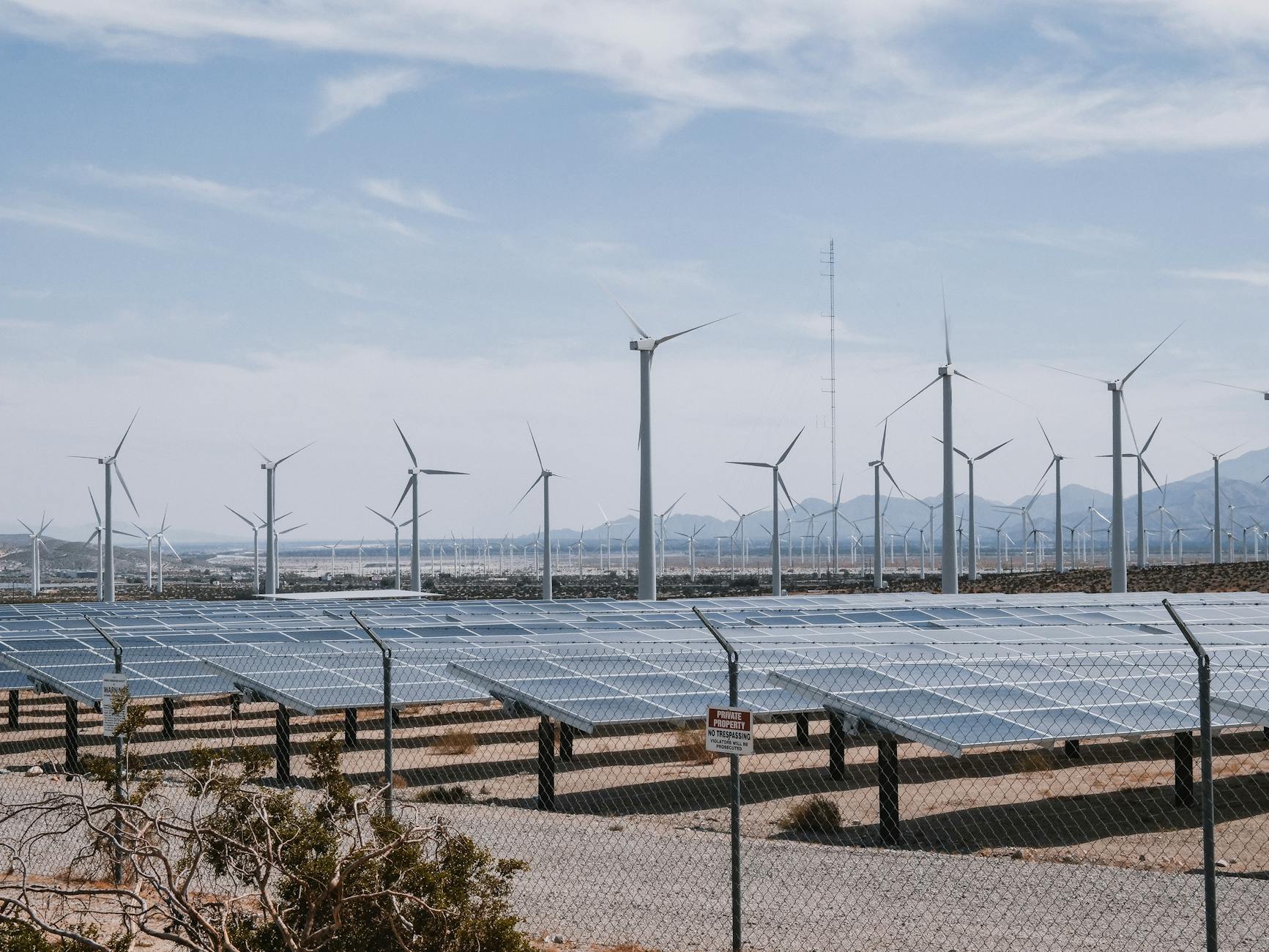
Bitcoin and the clean tech industry are converging in ways that most energy sector observers did not expect five years ago. Renewable energy startups, carbon credit registries, and green infrastructure developers are using Bitcoin as a settlement layer for cross-border transactions, a fundraising mechanism for early-stage projects, and a way to monetise surplus power that traditional grids cannot absorb efficiently. The connection isn't symbolic. It's operational.
Why clean tech needs a different payment rail
Clean tech projects are inherently global. A solar developer in Queensland might source panels from a manufacturer in Germany, sell renewable energy certificates to a buyer in Singapore, and pay engineering contractors in Chile. Each of those legs carries a correspondent banking fee, a foreign exchange spread, and a settlement delay that can run to five business days. For a capital-intensive project with tight margins, those frictions compound fast.
Bitcoin removes the correspondent banking step entirely. A transaction that would have required three banking relationships and multiple currency conversions settles on the Bitcoin network in under an hour, for a fee that doesn't scale with the dollar amount being sent. That matters most for the small-to-mid-size clean tech operators who can't negotiate preferential FX rates the way a multinational can.
McLeod Pacific Investments helps Australian businesses and individuals buy and sell Bitcoin quickly, which puts the company directly in the path of clean tech operators looking to move money across borders without the traditional banking overhead. Understanding how Bitcoin handles cross-border payments is the first practical step for any clean tech firm considering the switch.
Carbon credit markets and the settlement problem
The voluntary carbon market has a well-documented settlement problem. Credits issued by registries like Verra or Gold Standard can take days to transfer between buyers and sellers, particularly across jurisdictions. Fraud and double-counting have also plagued the market, eroding trust in what should be a straightforward transaction.
Bitcoin's transparent, append-only ledger addresses both issues. When a carbon credit transfer is anchored to a Bitcoin transaction, the timestamp and the counterparty details become part of a public record that neither party can alter after the fact. Several clean tech projects in 2025 and 2026 began piloting this approach, using Bitcoin's base layer as a notarisation tool rather than a currency per se.
Settlement speed is the other gain. A buyer in Tokyo can pay a carbon credit seller in Cape Town in Bitcoin, confirm within the hour, and have an immutable record of the trade. No correspondent bank. No three-day wait. No risk of a payment reversing after the credit has already been transferred.
Renewable energy projects and Bitcoin treasury holdings
A small but growing number of clean tech operators are choosing to hold a portion of their treasury in Bitcoin rather than converting all revenue back to fiat. The reasoning mirrors the argument that technology companies made starting in 2020: fiat cash erodes in purchasing power, while Bitcoin has historically outpaced inflation over four-year horizons.
For a renewable energy company with long-duration assets (a wind farm has a 25-year lifespan), the currency risk on retained earnings is real. Holding 5 to 10 percent of reserves in Bitcoin is a hedge, not a speculation. It's the same logic that applies to any capital-intensive business with multi-decade time horizons.
Australian clean tech operators considering this approach should read up on how Bitcoin is already intersecting with the broader energy sector, where power producers are finding practical uses well beyond payment processing.
Grid balancing and stranded renewable energy
One of the most surprising uses of Bitcoin in clean tech is as a buyer of last resort for stranded renewable energy. Solar and wind farms frequently generate more power than the grid can absorb at a given moment. That surplus is either curtailed (wasted) or sold at a negative spot price during periods of oversupply.
Bitcoin mining offers a third option. Mining hardware can be switched on when power is cheap and abundant, consuming surplus renewable electricity that would otherwise go to waste, and switched off when grid demand rises. The miner pays the generator for electricity; the generator gets revenue instead of curtailment. Neither party needs a bank to intermediate the relationship.
This model is already running at commercial scale in Texas, Iceland, and parts of regional Australia. It doesn't make Bitcoin "green" by itself, but it does create a financial incentive for clean energy producers to build more capacity, knowing they have a flexible load buyer available around the clock.
Green bonds and Bitcoin-denominated fundraising
Green bonds are the traditional instrument for financing clean infrastructure, but they require a rating agency, an underwriter, a trustee, and a prospectus. That process costs between $500,000 and $2 million to execute, putting it out of reach for projects below roughly $50 million in size. Most community solar projects, micro-hydro installations, and agricultural biogas facilities sit well below that threshold.
Bitcoin-denominated fundraising lets smaller projects reach a global pool of investors directly. A geothermal developer in regional New South Wales can raise $3 million from 200 Bitcoin holders across 15 countries without engaging an investment bank. Settlement is instant; custody is straightforward; reporting happens on a public ledger.
The regulatory picture is still evolving in Australia, and McLeod Pacific Investments recommends that any clean tech operator exploring this route seek independent legal advice before structuring a public raise. The mechanics work. The compliance layer needs attention.
What clean tech operators should consider before adopting Bitcoin
Three practical questions come up in almost every conversation between clean tech businesses and Bitcoin payment rails.
- Volatility: Bitcoin's price moves sharply. A company that invoices in Bitcoin and holds receivables for 30 days carries meaningful currency risk. The common mitigation is to convert to Australian dollars at the point of receipt and only hold Bitcoin intentionally as a treasury asset.
- Tax treatment: The ATO treats Bitcoin as property, meaning every disposal (including using it to pay a supplier) is a taxable event. Clean tech operators need a cost basis tracking system from day one, not retrofitted later.
- Custody: Large treasury holdings should never sit on an exchange. Hardware wallets and multisignature setups are the standard for corporate Bitcoin custody. The security model is different from bank accounts, and it rewards preparation.
Clean tech is a sector defined by long investment horizons, complex cross-border supply chains, and a constant search for lower-cost capital. Bitcoin addresses at least two of those three pressures directly. The operators who understand the tool clearly will be better placed to use it without the mistakes that typically come from treating it as an afterthought.